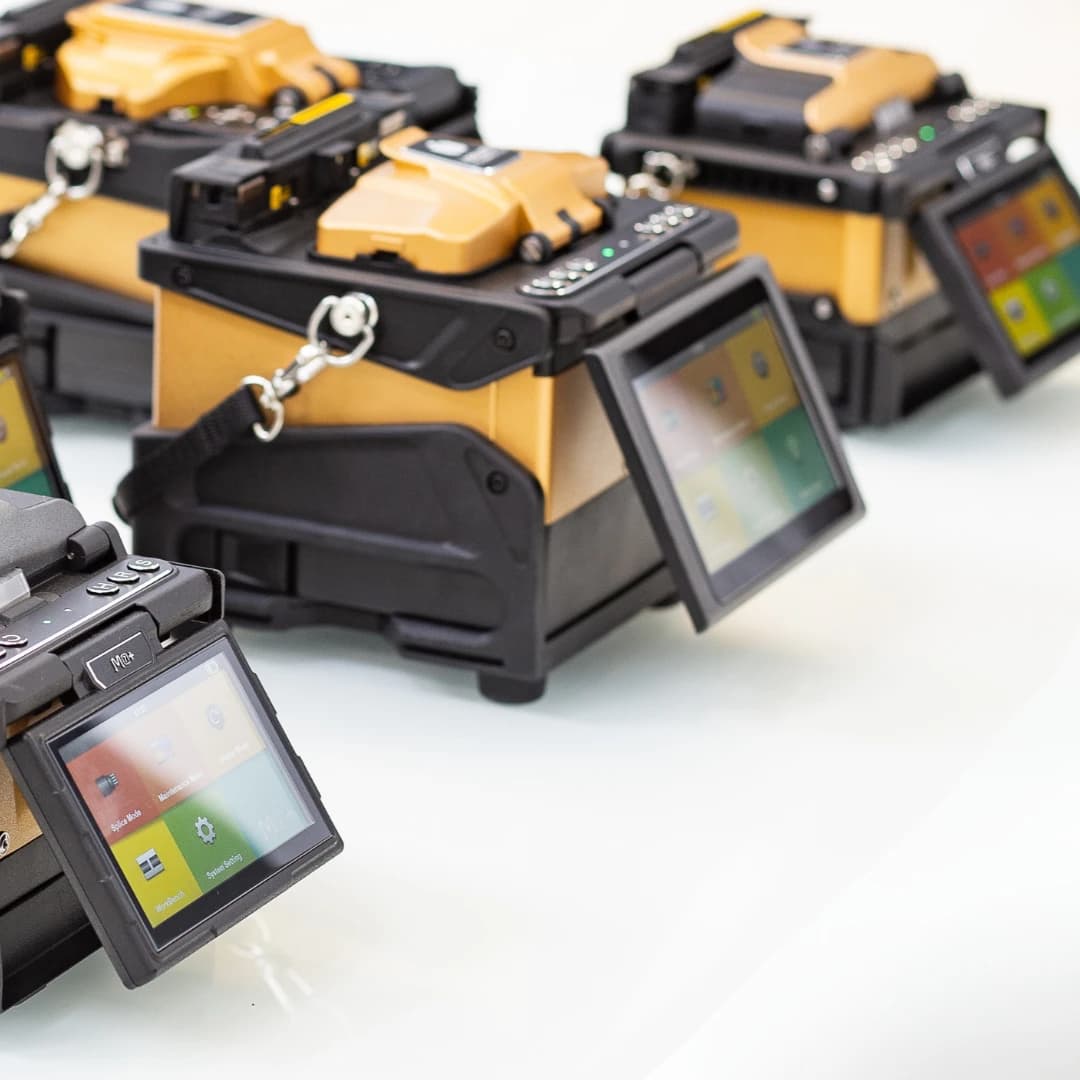
New-generation fusion splicers significantly reduce error rates thanks to their advanced alignment systems, smarter automation, and improved environmental handling. Unlike older models that relied mainly on basic V-groove or limited core alignment, modern splicers use multi-axis core alignment with real-time image processing and high-resolution digital microscopes. This allows the device to detect even the smallest deviations in fiber position and automatically correct them, resulting in much more accurate and stable splices.
They also adapt better to outdoor conditions. Temperature shifts, moisture, dust and wind often affect the arc quality during splicing, but new-generation devices automatically calibrate the arc, compensate for environmental changes and protect the splice zone from external interference. This ensures consistent results whether the engineer is working indoors, on a pole, or in harsh weather.
Improved heating and arc-control algorithms further reduce human error. Modern electrodes stabilize the arc faster, prevent over-melting or under-fusion, and adjust power levels depending on fiber type, keeping the splice uniform every time. At the same time, the device evaluates the fiber cleave quality before the splice. If the end-face is imperfect or the angle is incorrect, the splicer immediately alerts the user, stopping a faulty splice before it happens.
The user interface also plays an important role. Large touchscreens, automatic mode selection and on-screen guidance help technicians make fewer mistakes and work more efficiently, even if they have limited experience. Stronger mechanical components such as upgraded clamps, windproof covers and durable housings additionally prevent errors caused by vibration or unstable fiber positioning.
Finally, new-generation fusion splicers improve quality control with detailed data logging, recording each splice’s parameters and performance indicators. This makes it easier to analyze results, troubleshoot issues and maintain consistent standards across projects. As a result, modern fusion splicers provide higher precision, better reliability and a noticeable reduction in error rates, making them an essential tool for today’s fiber optic installations.