In 2026, global connectivity is driven by two major technologies: fiber optic networks and satellite internet systems. While both aim to deliver high-speed access to digital services, they are fundamentally different in architecture, performance, and application. The comparison is no longer about direct competition, but about which technology is best suited for specific use cases and environments.
Fiber optic networks operate through the transmission of data as light pulses traveling through glass or plastic fibers. This enables extremely high bandwidth, low signal loss, and stable long-distance communication. Modern fiber infrastructures include single-mode and multi-mode cables, deployed through underground, aerial, and submarine routes. These systems form the backbone of global internet infrastructure, supporting data centers, enterprise networks, telecom operators, and smart city ecosystems.
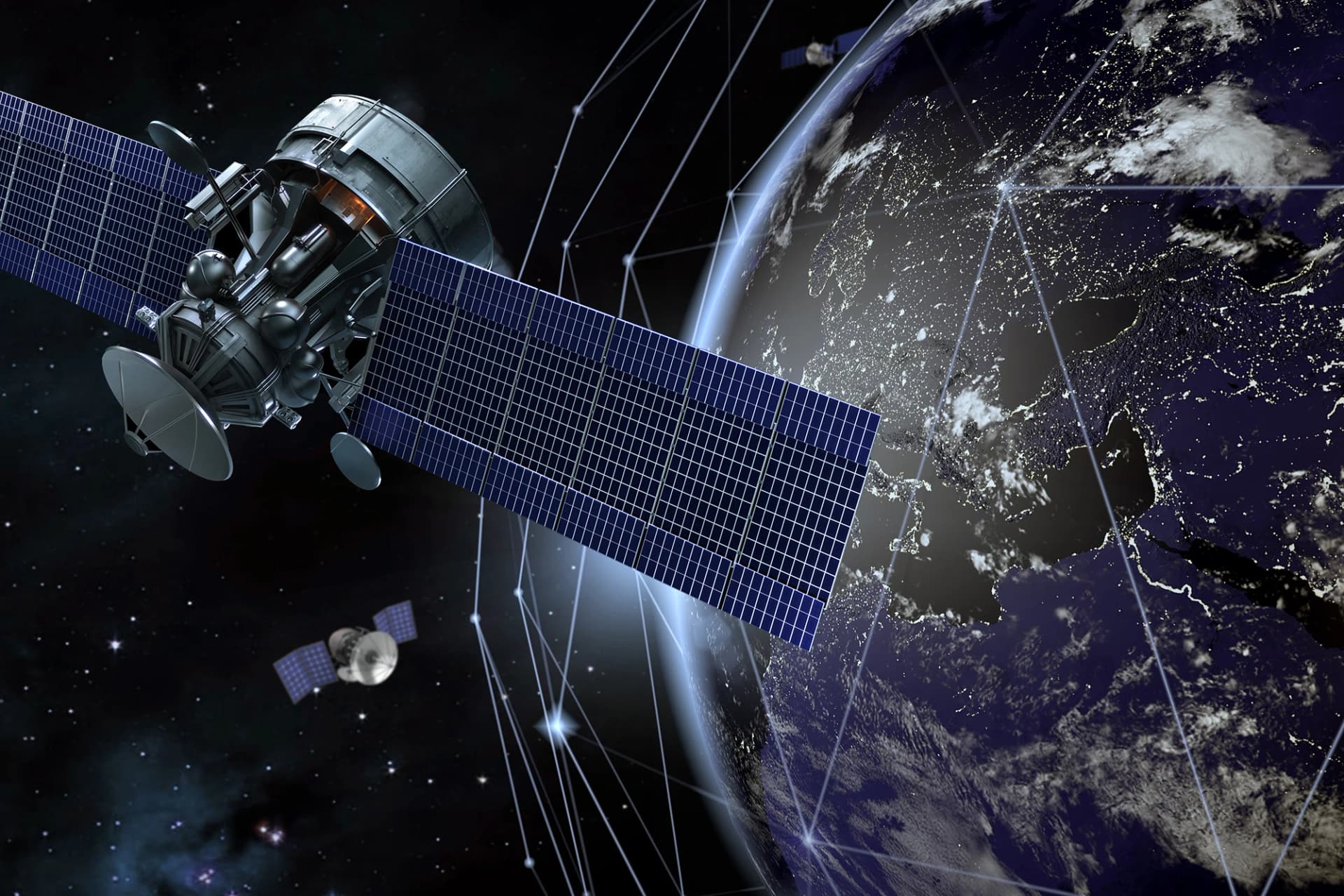
In contrast, satellite internet relies on wireless communication between ground stations and satellites orbiting the Earth, increasingly using Low Earth Orbit (LEO) constellations. Unlike fiber, satellite systems do not require physical cabling, allowing rapid deployment across regions where terrestrial infrastructure is limited or unavailable. This makes satellite technology especially important for remote areas, maritime connectivity, aviation, and emergency communications.
When comparing performance, fiber optic networks consistently outperform satellite systems in terms of bandwidth and stability. Fiber can deliver multi-gigabit speeds ranging from 1 Gbps to 10+ Gbps and beyond, with consistent throughput and minimal signal degradation. Satellite internet, even with modern LEO advancements, typically provides speeds in the range of tens to a few hundred Mbps, with performance influenced by satellite density, network load, and environmental conditions.
Latency is another critical factor where fiber maintains a clear advantage.
Fiber optic connections typically achieve ultra-low latency between 5 and 15 milliseconds, making them ideal for real-time applications such as cloud computing, financial systems, video conferencing, and online gaming. Satellite internet has improved significantly with LEO systems, reducing latency to approximately 20 to 60 milliseconds, but it still experiences variability due to satellite handovers and atmospheric conditions.
Reliability and stability further differentiate the two technologies. Fiber networks are highly resistant to electromagnetic interference and weather conditions, providing consistent performance and strong service-level reliability once installed. Satellite systems, while highly innovative, can be affected by environmental factors, line-of-sight limitations, and network congestion, which may impact consistency in high-demand scenarios.
However, satellite internet holds a major advantage in deployment flexibility and geographic coverage. It can provide connectivity almost anywhere on the planet without the need for physical infrastructure, making it a crucial solution for rural and underserved regions.
Fiber optic networks, on the other hand, require significant investment in physical installation, including trenching and regulatory coordination, which limits their reach in difficult terrains or low-density areas. Despite this, fiber remains unmatched in scalability and long-term cost efficiency in urban and industrial environments.
In practical applications, fiber optic networks are the preferred solution for data centers, smart cities, enterprise IT infrastructure, and any environment requiring high bandwidth and ultra-low latency.
Satellite internet is best suited for remote broadband access, mobile connectivity, maritime and aviation communication, and disaster recovery scenarios where rapid deployment is essential.
Looking ahead, both technologies will continue to evolve. Fiber optics are advancing toward multi-terabit capacity, improved optical components, and even more efficient backbone networks. Satellite systems are expanding LEO constellations, improving latency and coverage density. However, fiber continues to scale more effectively in terms of capacity, energy efficiency, and long-term infrastructure performance.
In conclusion, fiber optic networks remain the leading technology for high-performance and scalable digital infrastructure in 2026, while satellite internet serves as a complementary solution that ensures global connectivity in areas where terrestrial networks cannot reach. The future of connectivity is not a choice between fiber and satellite, but a hybrid model where fiber forms the backbone of global communication and satellite extends coverage to the most remote corners of the world.